MINETWIN CASE STUDY #7
THE CHALLENGE
Head office cannot check the number of equipment units requested by the mines. Mines complain that they do not have enough equipment to meet the plan.
ROI of new mining and ore transportation technologies is hard to estimate due to multiple moving constraints and non-linear dependencies of the underground mines.
THE CLIENT
One of the world’s largest producers of refined nickel and palladium, operating complex underground mining assets in Eurasia.
THE SOLUTION
Check the feasibility of mine plan and evaluate impact of new technologies with simulation models.
Perform scenario analysis in MineTwin to determine the required number of equipment unit to purchase each year.
THE RESULTS
Savings of $262M due to equipment fleet optimization.
MineTwin ROI exceeds 800% due to more optimal scheduling and redistribution of equipment between mines.
Determined ROI of 10 innovative initiatives, including using fast borers, railveyors, hot-seat shift changes, and others.
CLIENT AND CONTECST
A leading global producer of nickel and palladium, implemented a simulation-based decision support system (MineTwin) to improve planning and coordination across six of its underground mining operations. The model has been in continuous use for over three years and is managed by a dedicated three-person team within the company’s headquarters.
THE OBJECTIVE
The goal was to enhance the accuracy and efficiency of operational planning and to bridge the gap between long-term mine strategy and short-term equipment scheduling. Traditional planning tools lacked the ability to account for complex resource interactions and operational constraints—particularly those involving equipment coordination and shift-level execution.
THE SOLUTION
A high-fidelity simulation model was developed to replicate the real-world operations of six underground mines. The model captures shift-level planning rules and intra-shift coordination of crews and equipment. It includes logic for key operational constraints, such as:
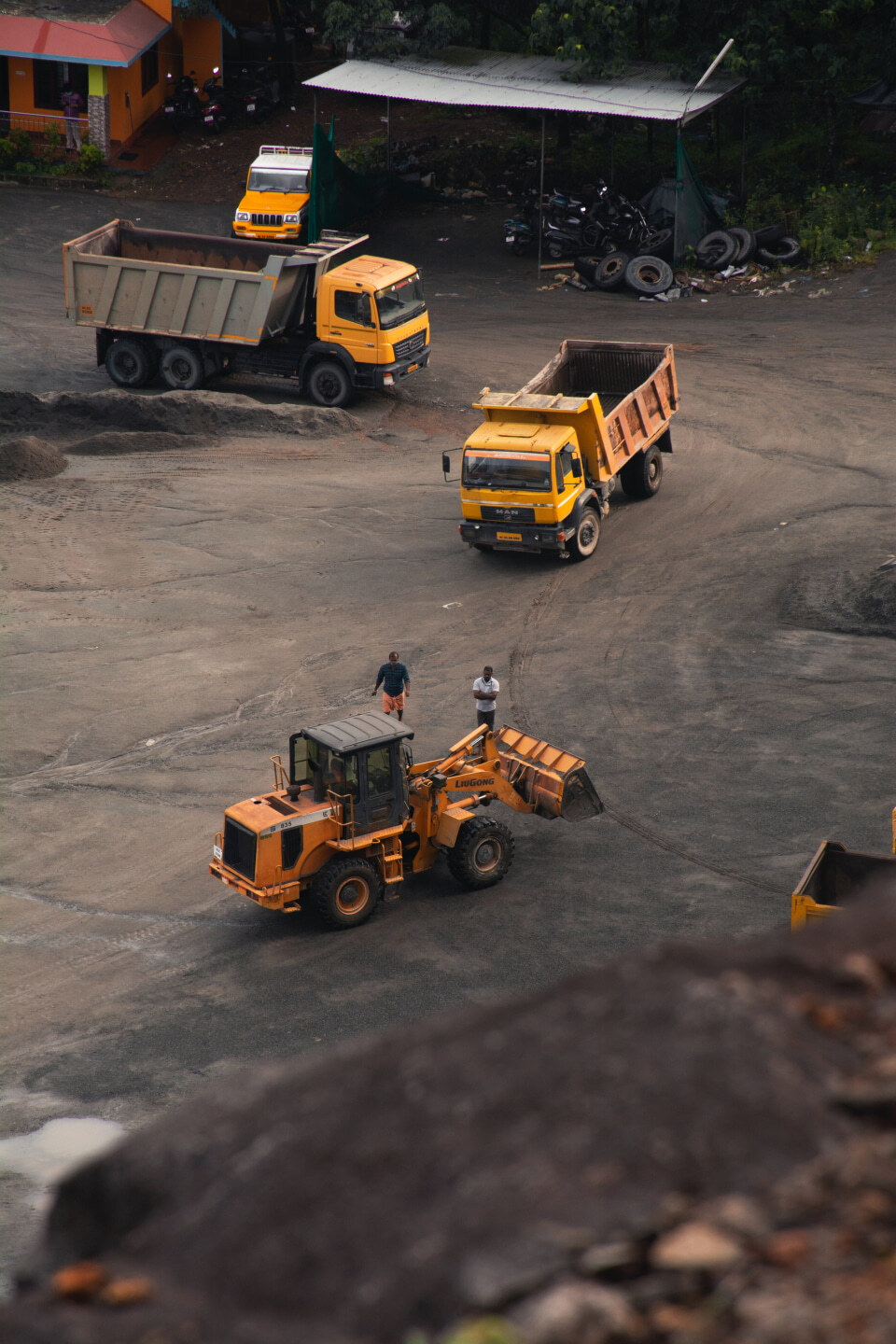
- Loader–truck interactions (e.g., LHDs and haul trucks)
- Equipment availability and relocation
- Production targets across daily, decadal, and monthly horizons
- Geotechnical and geological limits
MineTwin’s model became a vital link between strategic life-of-mine planning and real-time execution, enabling planners to validate whether annual, monthly, and daily plans are feasible under real-world constraints.
IMPLEMENTATION RESULTS
- More than 10 types of technological equipment have been modeled
- Simulation covers over 500 units of equipment
- Auxiliary equipment fleet sizing is performed using the simulation model
- The company’s main equipment fleet has been optimized using the simulation model
- The system allows various business cases to be modeled using the company’s internal resources
KEY BENEFITS OF MINETWIN
Transparency: Improves visibility into mine operations, enabling structured analysis of key KPIs.
Planning Accuracy: Supports execution-level planning with realistic resource and process logic.
Scalability: One model and team supports six mines, reducing overhead and ensuring consistency.
Foundation for Digital Twin: The simulation logic lays the groundwork for full digital twin development by integrating planning, coordination, and execution.
MINETWIN COMPETENSE CENTER
A dedicated MineTwin competence center was established within the client’s technical division to support simulation-driven planning across six underground mines.
Staffed by 3–5 trained specialists, the center develops and maintains MineTwin models, ensuring consistent application in fleet sizing, equipment scheduling, and scenario analysis.
The in-house team enables rapid iteration, internal knowledge growth, and reduced reliance on external vendors, forming a core component of the client’s digital mine planning framework
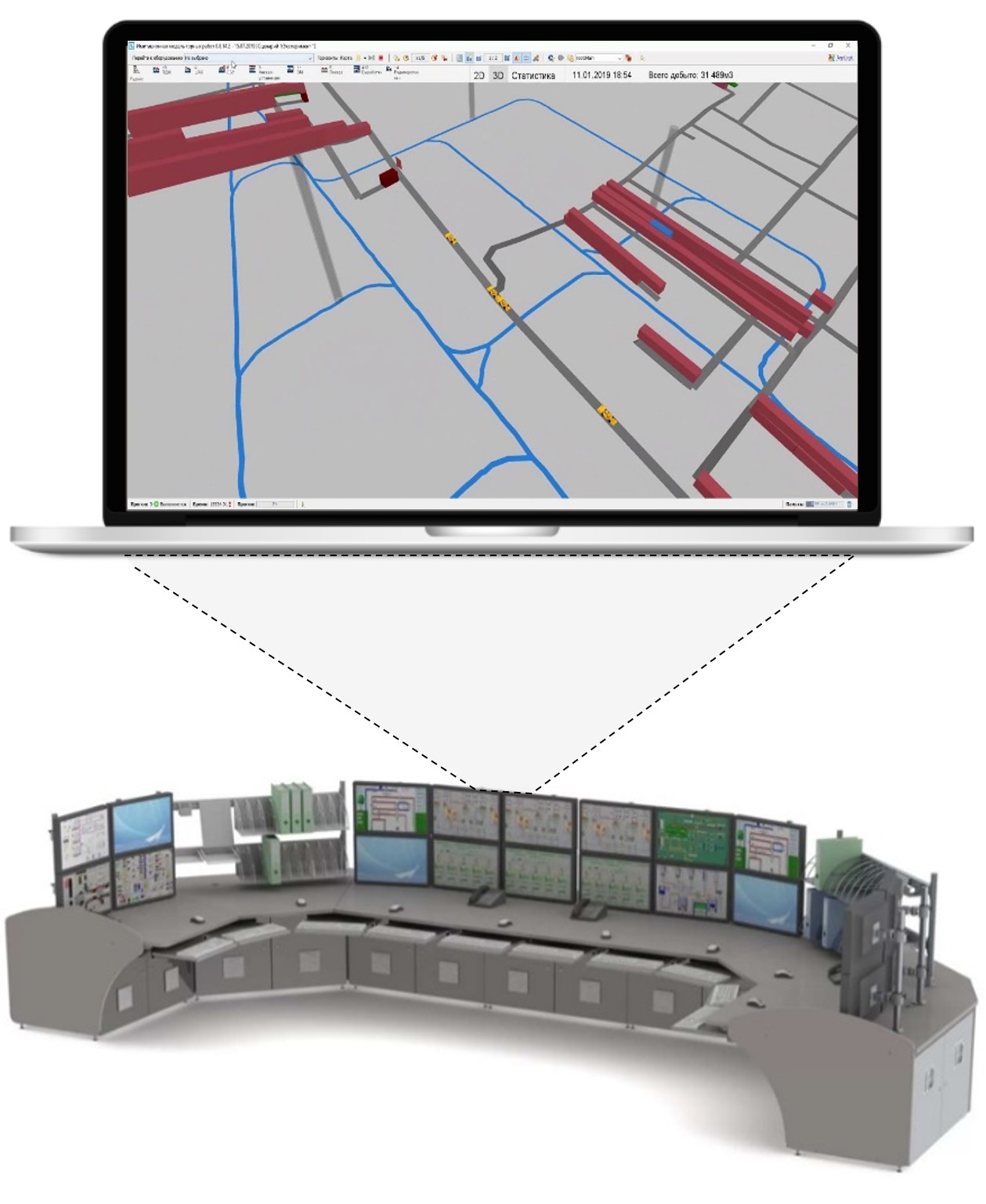
Using simulation has become an industry standard in mining
Todays modern simulation tools, such as MineTwin, allow to speed-up creation of simulation models.